Norval Locksmith ProsBulletin 2 of 3Halton Hills, Ontario
High Security Locks: inside the visit
High security locks are cylinders and deadbolts designed to defeat the methods used against ordinary doors.
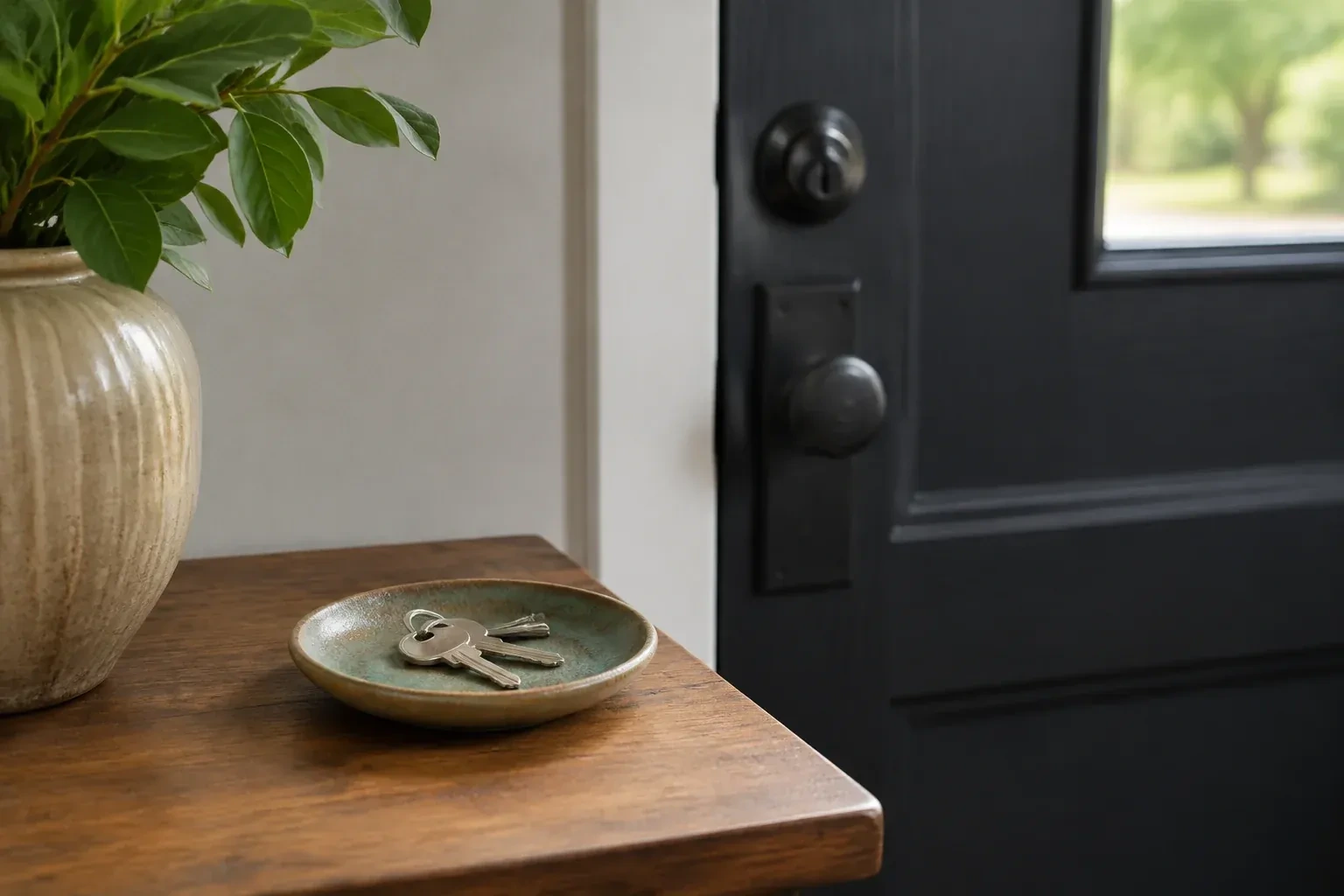
High security locks are cylinders and deadbolts designed to defeat the methods used against ordinary doors. Inside the cylinder a second locking mechanism, usually a sidebar released by finger pins or rotating pins, has to be satisfied at the same time as the normal pin stack, which is what stops picking and bumping. Hardened steel inserts stop drill bits. The bolt is thicker and carries a hardened pin against sawing, and a reinforced strike ties the lock into the wall framing. Just as important, the key is cut on a patented blank that only an authorised person can have copied, so your key count stays known.
What the door is protecting
The assessment starts with a question rather than a tape measure: what is behind this door, and what has made you think about it now? A front door on a family home, a stockroom with prescription drugs and a server closet in an office carry different risks and deserve different levels of hardware. The locksmith also asks who has keys today and how sure you are of that count. Those answers decide whether the right answer is a graded deadbolt with a controlled key, a laboratory-rated cylinder in a heavy lock body, or a small keyed system across several doors. Spending goes where the risk actually sits.
Testing the whole assembly
The finish is a methodical test. Every key is cycled in every lock from both sides, with the door open and then closed and latched. The bolt is watched entering the strike pocket to confirm it throws fully and does not drag. The door is pushed and pulled while locked to feel for play at the strike or hinges. Cylinders receive a dry lubricant approved for their mechanism. Then the locksmith walks you through the operation, the key control documents and the record of hardware fitted, so you know both how to use the door and how to order the next key.
Proof for insurers, landlords and tenants
You leave with a written record of what was fitted: the cylinder type and its rating, the deadbolt grade, the strike and screws installed, and the key system registration. Insurers sometimes ask for this when a policy specifies stronger hardware, landlords keep it in the property file, and tenants have something to hand back at move-out. It also helps the next locksmith, who can see at a glance what keyway and format the doors carry. Keep the invoice and the key control documents together; they are the paperwork side of a physical upgrade.